Wine Tastings: My Path to More Confidence
Reading time: 13 minutes
I stood in front of a table with six wine glasses at the Van Volxem winery on the Saar River in Germany, and I didn't know whether to smell the glass first or just drink. My date, a successful management consultant in his mid-50s, watched me with amusement. In that moment it hit me: wine tasting and self-confidence are directly connected. If you master the codes of gourmet culture, you move more securely in upscale circles. Today, after three years of regular wine tastings, I have relaxed conversations about terroir and tannins, whereas I used to fidget nervously with the stem of my glass.
Wine tastings have given me more than just knowledge about grape varieties. They showed me how to carry myself in situations that felt foreign at first. Every time I sat down at a tasting, I learned not only about wine but also about myself. I want to share that experience with you, because maybe you're at a similar point to where I was back then.
Why wine knowledge is indispensable in upscale lifestyle dating
In upscale lifestyle dating, I regularly meet men who see wine culture as a matter of course in their lives. According to a 2023 study by the German Wine Institute, 67 percent of respondents with a household income above €4,000 said they regularly drink quality wine and actively engage with wine culture. That number makes it clear: if you want to appear confident in this world, you can't get around the basics.
My first real wine tasting took place at the Berlin restaurant Rutz on Chausseestraße 8. The sommelier presented a 2018 Spätburgunder (Pinot Noir) from the Meyer-Näkel winery in the Ahr Valley. I nodded politely, but I had no idea what terms like "mineral" or "elegant structure" meant. The man across from me effortlessly carried on a conversation about vineyard site potential and barrique aging. I felt left out, even though nobody was deliberately excluding me. That evening I decided to change that.
The social code behind the wine tasting
Wine tastings follow clear rules that can be learned. Swirling the glass has a reason: it releases aromas. Loud slurping isn't rude, it's technique: air intensifies the perception of flavor. Understanding this wine tasting etiquette gave me confidence. Suddenly I knew what was expected of me.
I signed up for a beginner course at the Berlin Wine Academy in Friedrichshain. Over eight weeks I learned the basics: recognizing grape varieties, judging quality markers, understanding wine and food pairings. The course cost $350 and was worth every penny. Not just for the wine knowledge, but because I met people there with similar goals: to feel more at ease in upscale circles.
How do I behave properly at a wine tasting
The first rule at wine tastings: there's no right or wrong when it comes to taste, but there is structure to tasting. Knowing that structure makes the difference between standing around unsure and taking part with confidence.
At my second tasting, at the VDP winery Reichsrat von Buhl in Deidesheim, I was handed a system I still use today. The sequence of a professional wine tasting always follows this pattern: first the eye (checking color and clarity), then the nose (picking up the aromas), finally the palate (analyzing the taste). These three steps give every tasting a structure.
The concrete process step by step
- Have the glass filled to a third, and never pour more yourself until the host or sommelier gives the signal
- Hold the glass by the stem, never the bowl, so the warmth of your hand doesn't affect the wine
- Look at the wine against a white background (tablecloth, napkin) to spot nuances of color
- Swirl the glass, put your nose in it, take two or three short breaths
- Take a small sip, move it around in your mouth, and draw a little air in through your lips (the slurp)
- Either swallow the wine or spit it into the spittoons provided; with more than five wines, spitting is standard
I refined this technique at my third tasting, at the Dr. Loosen winery in Bernkastel on the Moselle. The cellar master explained to us that professional tasters always spit at large tastings so they stay sober. Knowing that took away my uncertainty: spitting isn't a sign of disrespect, it's a sign of professionalism.
From theory to practice: holding my first conversations about culture
Wine knowledge alone doesn't make a good conversation. I had to learn to use what I knew in a way that creates real conversation. On a date at the Rutz Wine Bar in Berlin-Mitte, I talked about my experience with a 2017 Riesling from the Emrich-Schönleber winery. Instead of just reciting technical terms, I described what the wine stirred up in me: "It had this lively acidity that reminded me of green apples in late summer."
The man across from me, an art collector from New York, opened up immediately. We didn't just talk about wine, but about taste in general, about aesthetics, about why some things move us and others don't. The conversation turned into a real exchange. That's exactly what I meant by holding conversations about culture: using wine as a bridge to deeper topics.
Learning to understand gourmet culture as a sugar boy
In lifestyle dating, gourmet culture is part of the shared experience. According to a 2024 survey by GfK (Gesellschaft für Konsumforschung, a German market research institute), people with higher incomes spend on average 23 percent more time on cultural and culinary experiences than the general population. Those numbers show: if you want to hold your own as the younger partner in this world, you should understand it.
I remember a weekend in the Pfalz (Palatinate), where my companion at the time took me to four different wineries. We visited Weingut Ökonomierat Rebholz in Siebeldingen, Weingut von Winning in Deidesheim, Weingut Philipp Kuhn in Laumersheim and Weingut Knipser in Laumersheim. That weekend I realized: it was never just about the wine. It was about time together, about discovering things, about sharing impressions.
Since then I've seen wine tastings as an investment in my personality. Every tasting expands not only my knowledge but also my ability to move confidently in different social settings. That's especially valuable when I want to make a good impression on a first date with a gay daddy.
Concrete wine regions for beginners

Not every wine region is equally suited to getting started. I recommend beginning with wines from the region closest to you. For me that was German wines. The quality is outstanding, the wineries are mostly open to visitors, and prices stay manageable for beginners.
My personal recommendation for getting started is the Pfalz in Germany. In the region between Neustadt an der Weinstraße and Bad Dürkheim you'll find more than 140 wineries in a compact area. Many offer beginner tastings from €15 (about $16) per person. The Wilhelmshof winery in Siebeldingen, for example, offers an open tasting of six wines every Saturday at 3 p.m. for €18 (about $20). Offers like that are ideal for gathering first experiences without pressure.
Which wine tasting is right for me
There are different formats of wine tastings. Open tastings at wineries are the most accessible. You just drop by, usually without registering, and take part. Guided tastings at wine bars or restaurants are more structured, often with a sommelier leading you through the wines. Private tastings for closed groups offer the most intensive learning experience, but they're also the most expensive.
I started with open tastings, then moved on to guided tastings, and today I attend a multi-course wine pairing at an upscale restaurant about once a quarter. That progression took two years. The key was consistency: better a small tasting every six weeks than one big event a year.
How wine knowledge for beginners concretely helps in upscale dating
Three months ago I met an architect from Boston at an event at the Hotel Adlon in Berlin. We got to talking, and he mentioned his passion for Bordeaux wines. In the past I would only have nodded. Instead I told him about my experience with a 2015 Château Haut-Bailly from Pessac-Léognan, which I'd tried at a tasting at Weinkontor Goertz in Düsseldorf.
The conversation took off. We swapped recommendations, talked about our favorite wineries, and spontaneously planned a joint visit to the Rheingau. That one conversation starter opened a door that would otherwise have stayed shut. That's exactly what I mean by wine tasting confidence: the knowledge gives me the security to contribute in moments like that.
A 2023 study by the University of Hohenheim shows that shared taste experiences measurably strengthen the bond between people. The researchers found that couples who regularly taste wine together report 31 percent higher relationship satisfaction than comparison groups. Those numbers don't surprise me. Tasting wine together means discovering, comparing and discussing together.
Appearing confident at cultural events through preparation
Two weeks ago I attended a charity gala at the Borchardt in Berlin. A matching wine was served with each course. The sommelier introduced the wines, and I was able to put the information into context. When he presented a 2019 Grauburgunder (Pinot Gris) from the Salwey winery in the Kaiserstuhl, I recognized the region and had something to contribute in conversation with my fellow guests at the table.
These small moments add up. Appearing confident at cultural events doesn't mean knowing everything. It means knowing enough not to be completely lost. It means being able to ask questions that show you're interested in the subject. It means being open to new things without feeling inferior.
My most important lessons for more confidence
After three years of regular wine tastings, I've gained five key insights. First: nobody expects me to be an expert. Interest and openness count for more than expertise. Second: most people in upscale circles are happy to explain things when you honestly admit you don't know something. Third: regularity beats intensity. Better a small tasting every two months than a weekend seminar once a year.
Fourth: the best conversations happen when I share personal impressions instead of stringing together technical terms. Fifth: wine culture opens doors to other areas of culture. If you can talk about wine, you often find a way into conversations about art, architecture or music, too. These topics overlap more than I first thought.
Practical tips for your first wine tastings
If you want to get started now, here's the path I'd recommend: find a wine bar or winery near you that offers open tastings. In big cities like New York, Chicago or San Francisco, many wine shops and wine bars host open tastings, often on Friday evenings, and wine regions such as Napa, Sonoma or the Willamette Valley are full of wineries welcoming first-timers.
Go to your first tasting alone. That may sound unusual, but I've found that on my own I focus more on the wines and the other participants. With friends, you tend to stay within your own group. On your own, you naturally start talking with other people. That's exactly where the most valuable learning experiences happen.
Invest in a small notebook. After every tasting I wrote down three things: Which wine did I like best? Why? What did I learn that's new? Those notes still help me today to trace my progress and to have concrete examples ready in conversations. They also document my journey, and that gives me a good feeling.
Wine tasting and personal growth in lifestyle dating
Platforms like MySugardaddy bring together people with different life experiences. As the younger partner, I bring different qualities than the person across from me. But shared interests create connection. Wine culture is one of those bridges that can span an age gap.
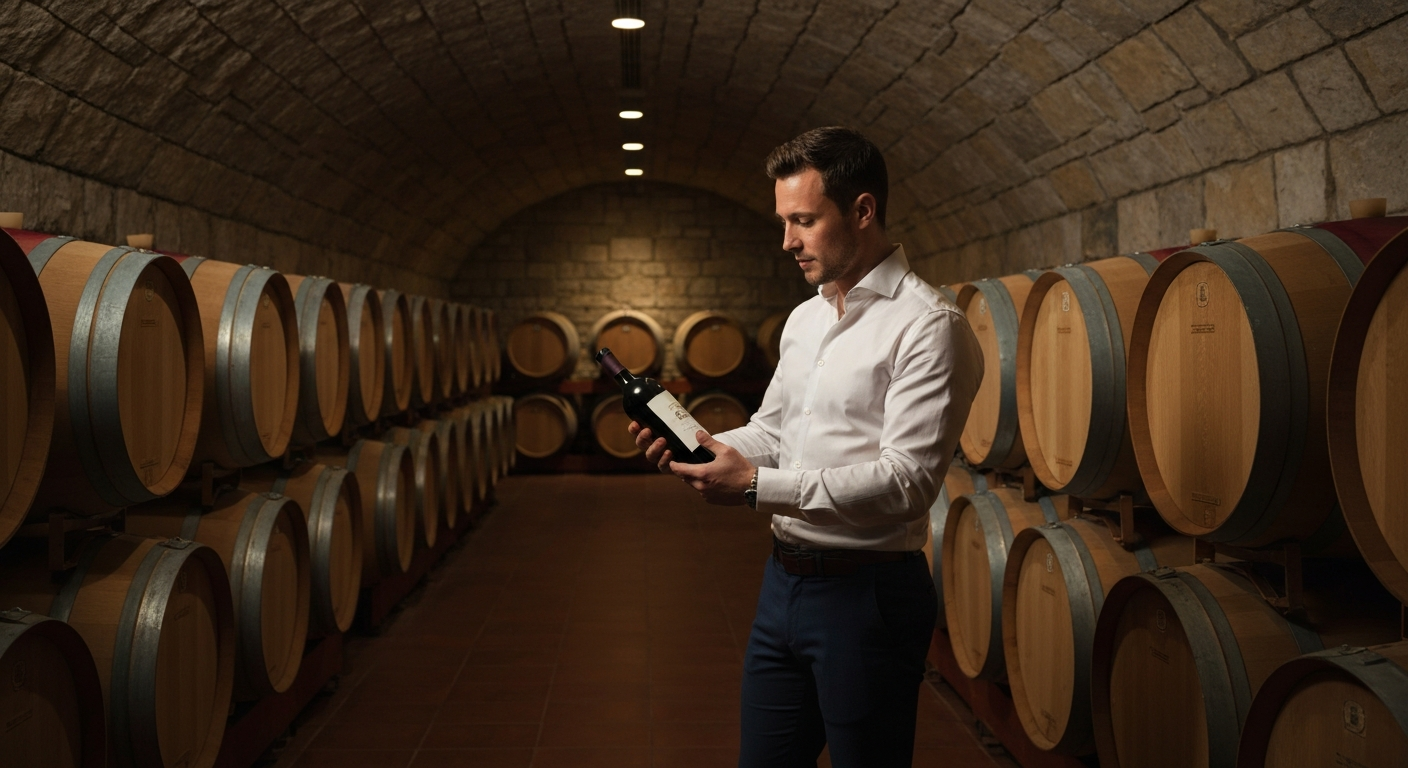
I remember a date with a wine merchant from Napa whom I'd met through MySugardaddy. We arranged a private tasting in his cellar. He walked me through his collection and explained the differences between various vintages from the same winery. Those three hours were more intense than ten ordinary dates. We shared something that mattered to him, and I showed genuine interest. That created closeness.
Learning gourmet culture also means understanding how experienced gay men spend their free time. Many gay daddies have built up expertise in particular areas over the years. Wine is often one of them. When I show that I'm willing to dive into this world, I signal appreciation for what matters to the other person.
Understanding the connection between wine culture and an upscale lifestyle
Wine tastings don't happen in a vacuum. They're part of a larger lifestyle context. At a tasting at the Keller winery in Rheinhessen, I met a restaurateur who later got me access to exclusive restaurant events. At a tasting at the Galerie Buchholz in Berlin, I got into conversation with an art collector who invited me to gallery openings.
These connections don't happen by chance. Wine tastings attract people who are interested in enjoyment and culture. That's exactly where I meet the people I also have something in common with beyond the topic of wine. That broadens my horizons and my social network at the same time.
From wine knowledge to other cultural skills
Interestingly, my engagement with wine has made me more attuned to other areas, too. Today I visit art exhibitions more often, go to concerts more consciously, take an interest in architecture. It's all connected. Gourmet culture is a complete package. Whoever starts to understand one area often develops curiosity about others.
This development has changed my confidence for good. Today I feel comfortable in situations that used to make me uneasy. When traveling to upscale gay destinations, I can join the conversation when it comes to local specialties. I understand the connections between region, terroir and taste. That understanding gives me security in many areas of life.
Frequently asked questions about wine tastings and confidence
How do I behave properly at my first wine tasting?
Arrive on time, listen attentively, and ask questions if you don't understand something. Nobody expects a beginner to know everything. Hold the glass by the stem, not the bowl. Swirl the wine gently and smell it before the first sip. With more than five wines, you're allowed to spit into the spittoons provided. That isn't rude, it's professional. After the tasting, write down your impressions, it helps with learning.
How long does it take until I feel confident at wine tastings?
For me it took about a year of monthly tastings before I really felt confident. The first three or four tastings are about orientation. You get to know the routines, the terms, the atmosphere. After about ten tastings you understand the basic connections. After a year you can articulate your own preferences and take part in conversations. This development takes time, but it's worth it.
What does a typical wine tasting for beginners cost?
Open tastings at wineries usually cost between $10 and $25 per person for four to six wines. Guided tastings at wine bars or restaurants run between $30 and $65. Multi-course wine pairings at upscale restaurants start at around $85. For getting started, the cheaper formats are perfectly sufficient. In my first year I spent an average of $38 per tasting and had very good experiences.
Do I have to like wine to benefit from wine tastings?
No, you don't have to be a wine lover. At first I only knew supermarket wine and found most wine too sour or too harsh. Through regular tastings my palate developed. Today I appreciate wines I would have rejected in the past. The learning process changes perception. More important than a love of wine is the openness to try new things and to commit to the process.
Which wine region is best for beginners?
Wine regions close to home are ideal for getting started. In Germany, the Pfalz and Rheinhessen offer many accessible wineries with good beginner offerings. The Moselle is perfect for Riesling lovers. Baden in the south has outstanding Pinot Noir. Internationally, wine regions in the south of France or northern Italy are well suited to beginners. The advantage of regions close to home: short travel, moderate prices, tours in your own language, high quality even at entry level.
Conclusion: seeing wine tasting and confidence as a complete package
Three years after I stood nervously at my first wine tasting, I'm a different person. Not because I can tell all the grape varieties apart today or know every vintage. But because I've learned to move in situations that used to feel foreign. Wine tastings showed me that an upscale lifestyle can be learned. It takes time, openness and consistency.
Today I go confidently to cultural events, have relaxed conversations about gourmet topics and feel like an equal partner in lifestyle dating. This development began with the decision to face my insecurity instead of avoiding it. Wine tastings were my tool for that. They can be yours, too.
If you want to take the first step now: find a tasting near you, sign up, go. The rest develops on its own. Every single tasting takes you further. And at some point you'll look back and realize how far you've come. Just like I did at the restaurant Rutz, when I first understood what "mineral" really means.